What Is DSD Audio and Why Does It Sound Different?
Understanding the 1-bit format that's captivating audiophiles worldwide—from its origins in SACD to DSD512 and beyond.
I remember the first time I heard a proper DSD recording. It was a Blue Coast Records release—"Looking for a Home" by Sara K.—played through a friend's system. Something was just different. The vocals hung in space with this presence that's hard to describe. It didn't sound "better" in the way more bass or more treble sounds better. It sounded more real.

So What Actually Is DSD?
DSD stands for Direct Stream Digital. Sony and Philips developed it back in the '90s when they were trying to figure out what should replace the CD. Their answer was the Super Audio CD (SACD), and DSD was the encoding format that made it work.
Here's where it gets interesting. You know how regular digital audio (PCM) works—it takes snapshots of the sound wave thousands of times per second and writes down the amplitude of each snapshot using lots of bits. CD quality is 16 bits, 44,100 times per second. Hi-res might be 24 bits at 192,000 samples per second.
DSD throws that whole approach out the window.
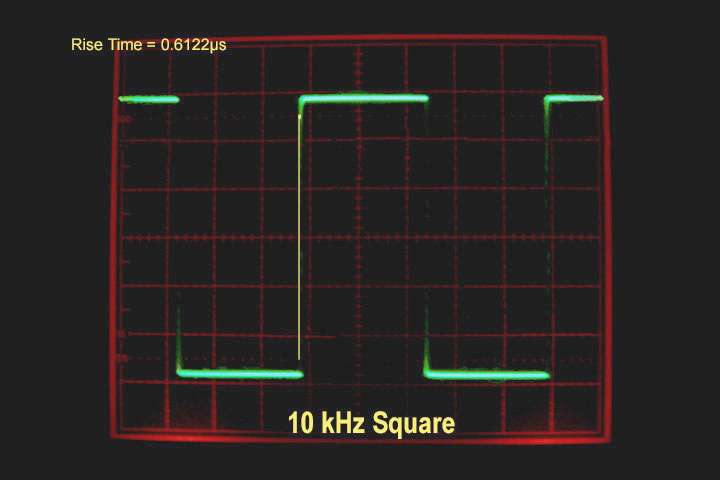
Instead of using lots of bits to describe "how loud" at each moment, DSD uses just one single bit. That bit just says "up" or "down"—is the waveform increasing or decreasing right now? But it does this insanely fast. Standard DSD64 samples 2.8 million times per second. DSD512 hits 22.5792 MHz—that's over 22 million samples every second.
Why Do People Say It Sounds More "Analog"?
Paul McGowan over at PS Audio has talked about this a lot on his Ask Paul videos. The way he puts it, DSD's single-bit approach is actually closer to how analog-to-digital converters work internally. Most ADCs use sigma-delta modulation—they're already creating something like a DSD stream—and then convert that to PCM for storage. With DSD, you're basically keeping that original stream intact.
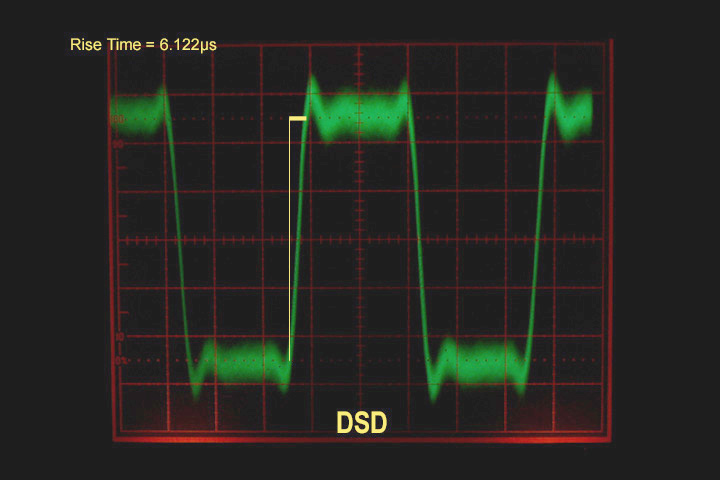
There's something else going on too. PCM requires steep anti-aliasing filters to prevent artifacts. These filters, even good ones, can mess with phase relationships in the upper frequencies. DSD pushes all the filtering requirements way up beyond the audible range. Some engineers argue this preserves the natural phase relationships that our ears use to locate sounds in space.
Is this why DSD sounds different? Maybe. Ted Smith, who designed PS Audio's DirectStream DAC, has written extensively about how he believes DSD's approach to noise shaping results in a more natural sound. Not everyone agrees—the format wars can get pretty heated—but there's clearly something that listeners respond to.
The DSD Family: From 64 to 512
Like most things in audio, DSD didn't stay still:
- DSD64: The original. 2.8224 MHz. What SACDs use.
- DSD128: Double-rate. 5.6448 MHz. Sweet spot for many listeners.
- DSD256: Quad-rate. 11.2896 MHz. Getting serious now.
- DSD512: Octuple-rate. 22.5792 MHz. The current summit.
Each step up pushes the noise further out of the audible band. DSD's noise-shaping means there's actually more noise than PCM, but it's all shoved up into ultrasonic frequencies where you can't hear it. Higher sample rates push it even further away.
Here's the thing though—and I wish someone had told me this earlier—most playback systems can't actually handle the higher rates natively. Your average streamer or DAC HAT tops out at DSD128, maybe DSD256 if you're lucky. DSD512? That typically requires specialized hardware designed specifically for native DSD playback.
The Elephant in the Room: DSD vs. FLAC
I get asked this constantly. "Should I buy the DSD version or just get it in FLAC?"
First—and this bugs me when people get it wrong—FLAC is just a container. It's like asking "should I get my food in a plastic container or should I get pasta?" FLAC holds PCM audio. The real question is DSD vs. PCM.
Here's my honest take: the recording matters way more than the format. A beautifully recorded album from Octave Records or 2L in standard resolution will destroy a mediocre recording in DSD512. Every time.
But when you have a great recording available in both formats? That's where it gets interesting. Cookie Marenco at Blue Coast Records has been a huge advocate for DSD precisely because of what she hears in her studio. Same source material, same mastering chain, but something about the DSD version just... breathes.
Scientific studies are mixed. Some show listeners can't tell the difference. Others suggest they can. My take? Trust your own ears, but make sure you're actually hearing native DSD. A lot of "DSD playback" is actually converting to PCM behind the scenes—and at that point, what's the point?
Native DSD: The Part Nobody Talks About
This is where I get a little frustrated with how DSD is marketed.
Everyone talks about DSD files and DSD DACs. What they don't mention is that getting DSD from your source to your DAC without conversion is surprisingly hard.
There's this thing called DoP—DSD over PCM. It wraps your DSD data inside PCM frames so it can travel over standard connections. Your DAC sees the marker bits, unwraps it, and processes the DSD. Sonically it's identical to native DSD. But here's the catch: DoP only works up to DSD128 on most systems. Want DSD256 or DSD512? You need native DSD transmission.
And native DSD transmission requires hardware that actually supports it. Most I2S DAC HATs on a Raspberry Pi? DoP only, DSD128 max. USB to many DACs? Often converts to PCM internally. It's a minefield.
If you're going to the trouble of buying DSD512 files—which aren't cheap—you want to know that every single bit is getting to your DAC untouched. Otherwise you've just got a very expensive, very large PCM file.
Where to Actually Get DSD Music
The catalog is smaller than PCM, but it's growing, and the quality tends to be exceptional:
- NativeDSD: The mothership. Huge catalog, true DSD recordings, and they're serious about provenance.
- Blue Coast Records: Cookie Marenco's label. Everything recorded in DSD from the start.
- Octave Records: Paul McGowan's label. Recorded on a Sonoma system, pure DSD.
- 2L: Norwegian label. Classical and choral music that will make your jaw drop.
- Acoustic Sounds: Chad Kassem's operation. Great analog-to-DSD transfers.
When you download, you'll see .dsf and .dff options. Grab DSF—it handles metadata properly. Nothing worse than a library full of "Unknown Artist."
Is It Worth It?
That depends on you. If you're streaming Spotify while doing dishes, DSD512 isn't going to change your life.
But if you're the type who actually sits down to listen—lights low, good headphones or a proper speaker system, giving the music your full attention—DSD offers something worth experiencing. There's a reason the format has such passionate advocates, from engineers like Ted Smith and Gus Skinas to labels like Blue Coast and 2L.
Just make sure your playback chain can actually deliver it properly. A DSD512 file playing through a system that converts it to PCM is like buying a Ferrari and towing it with a truck. You've got to have native DSD playback from source to DAC, or the whole exercise is academic.
For my Pi-based streaming setup, that meant finding hardware that could actually do native DSD512—no DoP, no conversion, just the raw 1-bit stream hitting the DAC. Those options are rarer than you'd think.
The DSD Bridge delivers native DSD512 from your Raspberry Pi—no conversion, no compromise.
See How It Works
Comments
Be the first to comment on this article.